
Common Eye Disease
Cataracts
Understanding why our vision can become cloudy as we get older
What is Cataract?
Inside your eye is a small, transparent structure called the crystalline lens. Its job is to help focus light onto the retina at the back of your eye so that you can see clearly.
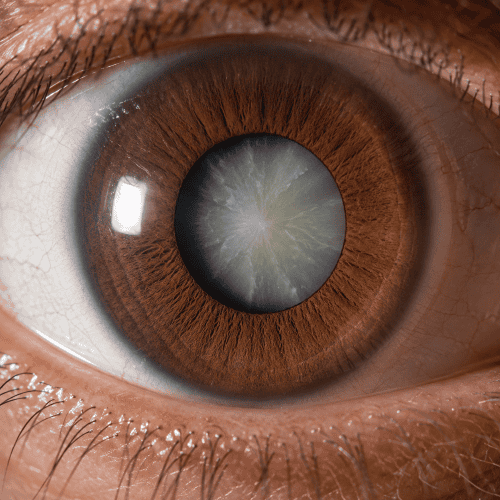
As we get older, the lens naturally changes and can gradually become less transparent. When this clouding develops, we call it a cataract. Instead of light passing cleanly through the lens, it becomes increasingly scattered, which can make vision appear blurred or hazy and increase problems with glare.
Cataracts usually develop slowly and are extremely common as we get older. They can affect one or both eyes and may progress at different rates.
A cataract isn’t a film or growth over the surface of the eye, and finding one doesn’t automatically mean you need treatment. What matters most is how much it is affecting your vision and the things you want to do

What you might notice
Cataracts usually develop gradually, so you may not notice the changes straight away. Often the first sign is simply that your vision doesn’t seem as crisp as it once did, even with your glasses.
Night driving can become particularly difficult. Cataracts scatter light as it passes through the lens, which can make headlights and streetlights appear brighter, create glare or haloes and reduce your ability to see clearly in lower light levels.
As the cataract develops, you might also notice:
What is happening inside the eye?
The natural lens inside your eye is made mostly of water and proteins arranged in a very precise way to keep it transparent. As we get older, these proteins gradually change and can begin to clump together, making parts of the lens cloudy.
Instead of light passing cleanly through the lens and focusing sharply on the retina, the cataract causes some of that light to scatter inside the eye. This reduces clarity and contrast and is also why bright lights and headlights can become increasingly troublesome.
Cataracts can develop in different parts of the lens and at different rates, which is why two people with cataracts may experience quite different symptoms.
How do we examine cataracts?
A closer look with the slit lamp
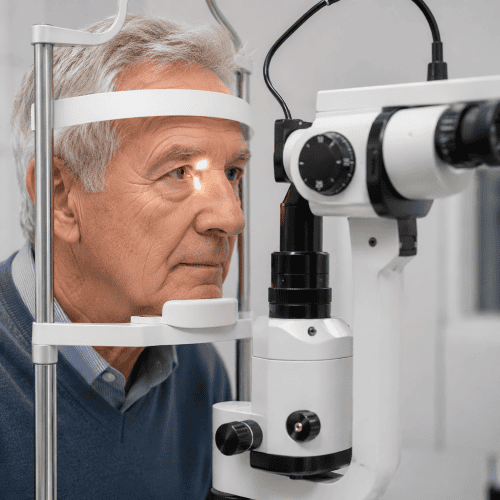
A slit lamp is a specialised microscope that allows us to examine the structures at the front of your eye in considerable detail, including the natural lens where cataracts develop.
By directing a narrow beam of light through the eye, we can see where the cataract is developing, the type of cataract present and how much of the lens has become cloudy. We can then record these findings and monitor any changes at future examinations.
However, the appearance of a cataract is only part of the picture. What matters most is how it is affecting your vision and everyday life. A cataract that looks quite significant may cause surprisingly few problems for one person, while a smaller cataract can cause troublesome glare or reduced vision for someone else.
Cataracts and your vision
Cataracts do more than simply make your vision blurred. As the natural lens becomes cloudy, light is increasingly scattered as it enters the eye, reducing contrast and making glare much more noticeable. This can become particularly troublesome when driving.
Low winter sun can be difficult because bright light entering the eye is scattered by the cataract, creating glare that can temporarily overwhelm detail. At night, the same effect can make oncoming headlights and streetlights appear dazzling or surrounded by haloes, while reduced contrast can make pedestrians, road markings and objects in darker areas harder to see.
These difficulties can occur even when you can still read quite well down an eye-test chart. This is because a conventional visual acuity measurement doesn’t fully reproduce the challenging lighting and contrast conditions encountered on the road.
In the UK, drivers have a legal responsibility to ensure that their eyesight meets the required DVLA standards for driving. Cataracts can eventually make it difficult to meet these standards, but they may also make someone feel uncomfortable or unsafe driving before their measured vision falls below the legal minimum.
If you are finding night driving increasingly difficult, avoiding journeys because of glare, or struggling with low sun despite an up-to-date spectacle prescription, it is worth discussing this at your eye examination. We can assess your vision and cataracts and help you understand whether they may be contributing to the problem.


WHAT HAPPENS NEXT?
What happens if we find cataracts?
Finding a cataract does not automatically mean that you need surgery. Cataracts usually develop gradually, and in their earlier stages we may simply monitor them as part of your regular eye examinations.
Sometimes the changes you are noticing can still be improved by updating your spectacle prescription. We can also look at ways of helping with glare. Good quality polarised prescription sunglasses can be particularly useful in bright conditions and low sun because they reduce reflected glare from surfaces such as wet roads. Transitions XTRActive polarised lenses may be another option for people who prefer lenses that adapt to changing light conditions.
For night driving, a high quality anti-reflection treatment such as Crizal Drive can reduce distracting reflections from the spectacle lenses themselves. No spectacle lens or coating can remove the light scatter caused by the cataract inside the eye, but making sure your prescription and lenses are optimised can help you make the best use of the vision you have.
As a cataract progresses, there may come a point when changing your glasses no longer provides enough improvement. The decision to consider cataract surgery is then based less on how the cataract looks and more on how it is affecting you. Difficulty driving, troublesome glare, problems reading or working, or being unable to enjoy hobbies and everyday activities can all be reasons to discuss referral.
If we feel your cataract may have reached that stage, we will explain what we have found and discuss the options available to you.

WORRIED ABOUT YOUR VISION
When might surgery be considered
There is no need to wait until a cataract is “ripe” before considering surgery. The decision is usually based on how much the cataract is affecting your vision and, importantly, whether that is beginning to interfere with your everyday life.
What happens during cataract surgery?
Cataract surgery involves removing the cloudy natural lens from inside your eye and replacing it with a clear artificial lens, known as an intraocular lens (IOL). The new lens remains permanently inside the eye and does not need to be removed or cleaned.
The procedure is usually carried out as day surgery under local anaesthetic, most commonly using anaesthetic eye drops. You are awake, but you should not be able to see the surgery taking place, people often describe seeing bright lights, colours or shapes instead.
The cloudy lens is broken into tiny pieces and gently removed through a very small incision. The new artificial lens is then carefully positioned inside the eye. The procedure itself is usually relatively quick, and most people are able to return home the same day.
Before surgery, measurements of your eye are taken to calculate the power of the replacement lens. There may also be different lens options and choices about the vision you would like to achieve after surgery, which the ophthalmology team will discuss with you.
Cataract surgery is one of the most commonly performed operations in the UK and has a high success rate, but, like any operation, it does carry risks. These will be explained to you as part of the consent process so that you can make an informed decision about treatment.


What happens after cataract surgery?
After cataract surgery, your vision may seem brighter and clearer quite quickly, although it is normal for the eye to take some time to settle. Colours can sometimes appear noticeably more vivid because you are once again looking through a clear lens rather than a cloudy cataract.
What can I do to reduce my risk of cataracts?
Most cataracts develop as part of the natural ageing process, so there is no guaranteed way to prevent them. Genetics also play a part, and some people simply develop cataracts earlier than others. There are, however, things you can do to help protect the health of your eyes and reduce some of the risks associated with cataract development.
Don’t smoke

Don’t Smoke
Protect Your Eyes

Protect Your Eyes
Look after your general health

Live Well


Understanding your eyes matters
If you are concerned about cataracts have a family history of the condition, or simply want to understand more about the health of your eyes, we are here to help.
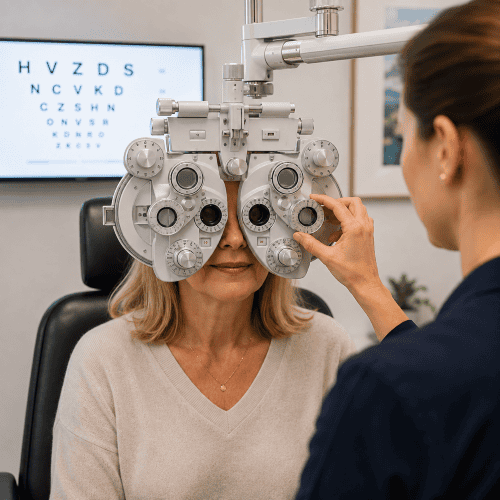
Our enhanced eye examinations give us additional time to discuss your individual risk factors and examine your eye health carefully. Advanced imaging such as OCT and Optomap can provide further information where appropriate, while allowing us to build a detailed record of your eyes that can be compared over time.
Most importantly, we will explain what we find, what it means for you and whether anything further needs to happen.